

New CRF Paper Challenges the Idea of a Single Goal for Coral Reef Restoration
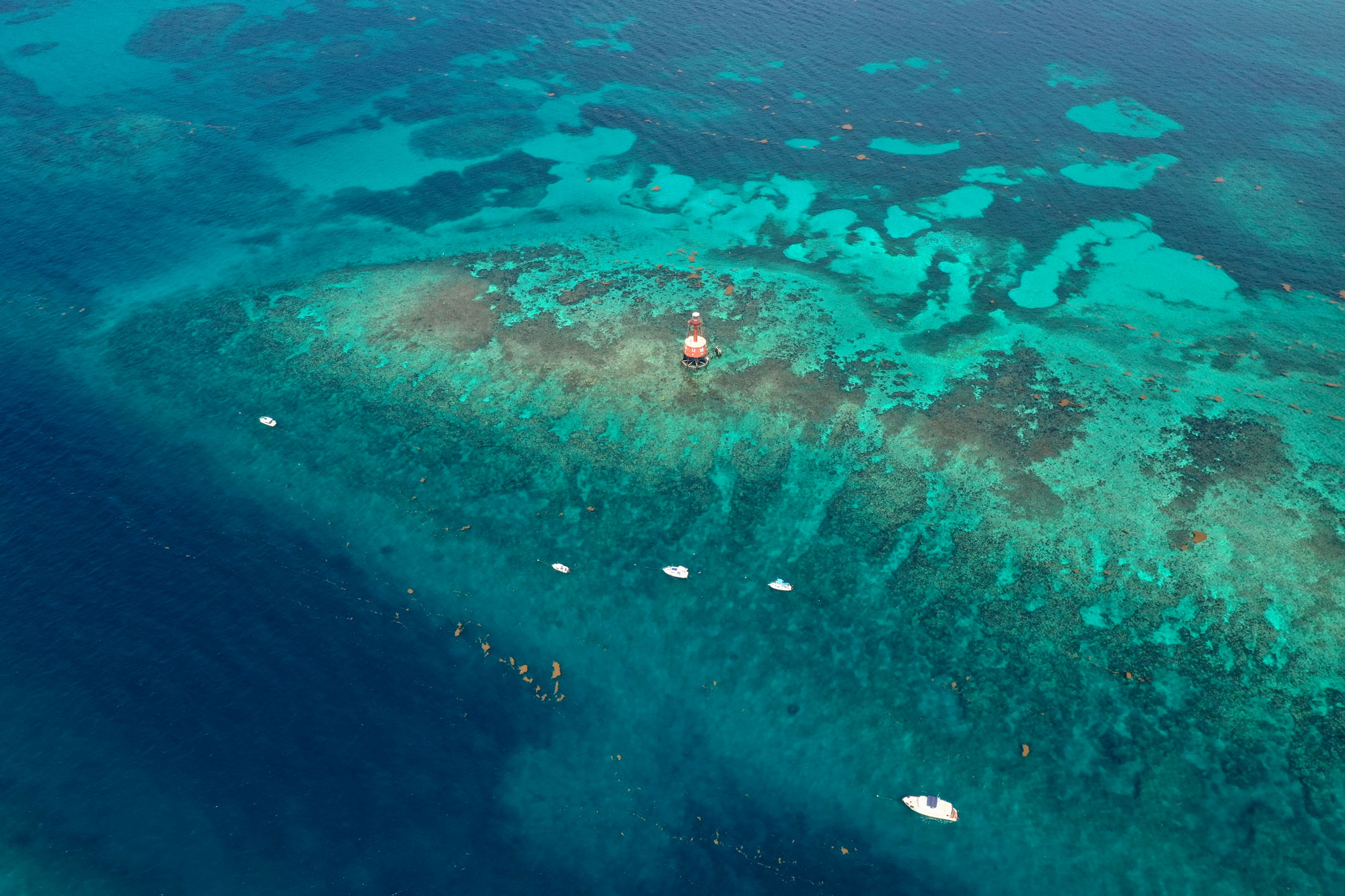
Recreational Dive Boats at Carysfort Reef in the Florida Keys (Jack Fishman/Project Aware/Coral Restoration Foundation™)
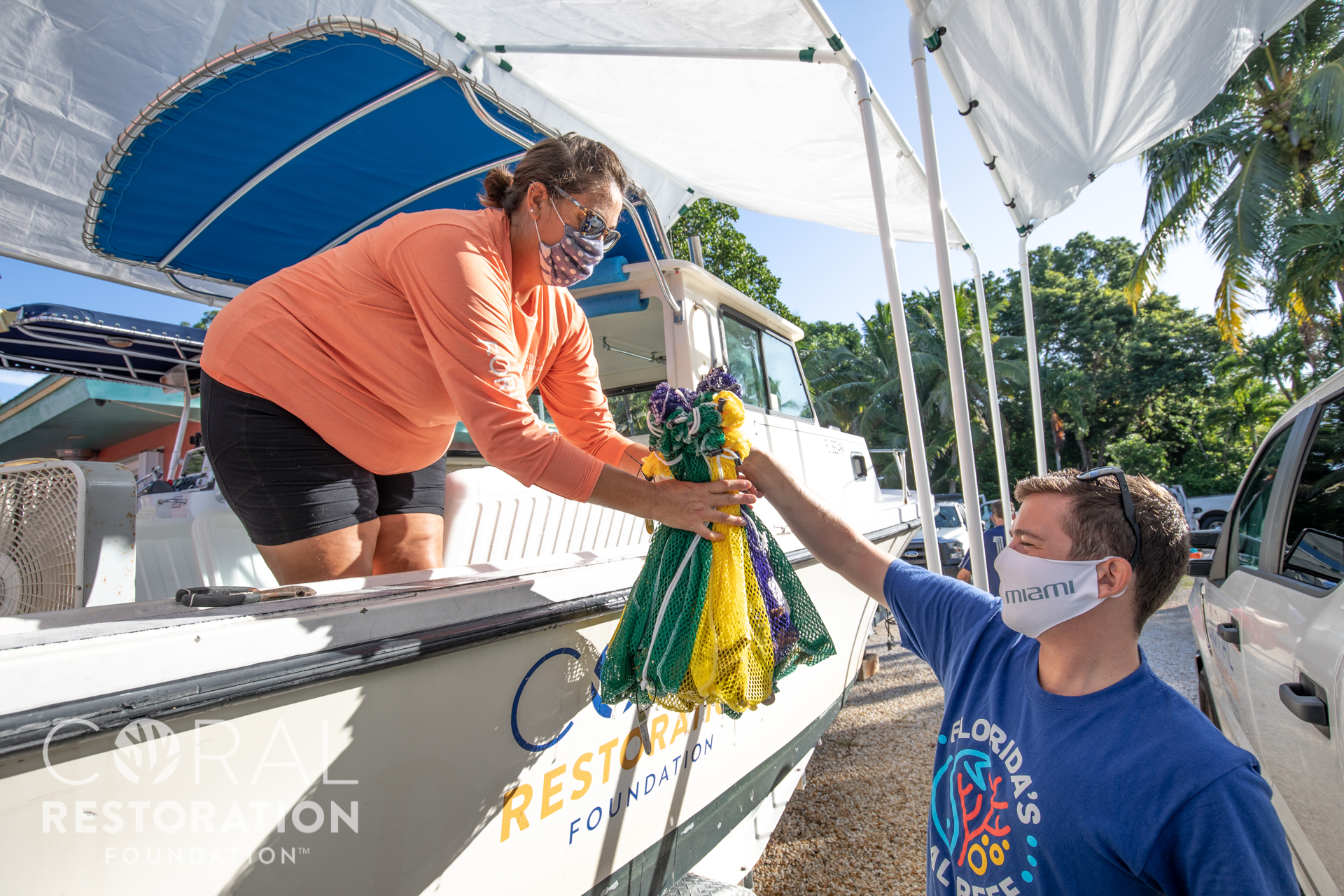
Scientists exchange coral genotypes to help preserve critical biodiversity in the Keys
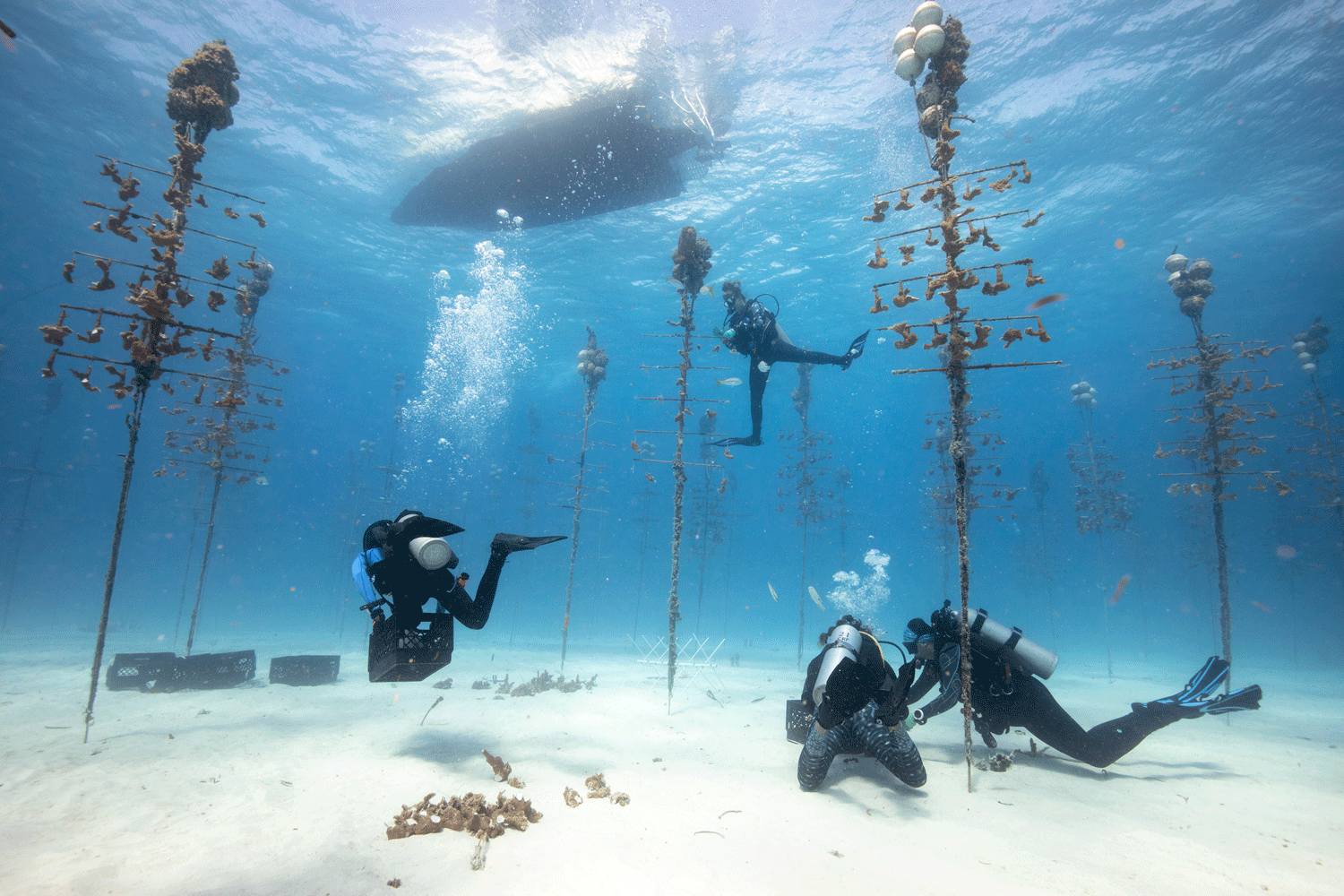
Dive team working in the CRF Coral Tree Nursery
A new paper from CRF CEO Dr R. Scott Winters asks a fundamental question for reef restoration: what do we value, and how should that shape action?
Are reefs valued because they protect coastlines, support fisheries, and sustain tourism? Or because particular reefs are part of the history and identity of coastal communities? Or because the species that build them have existed for millions of years and have value in their own right?
In a new Perspective published in *Coral Reefs*, Coral Restoration Foundation CEO Dr R. Scott Winters argues that these questions shape what restoration is trying to achieve, which interventions are considered acceptable, and how success is defined.
And simple answers should not be expected.
Different restoration efforts will pursue different goals and require different measures of success. Winters’ argument points towards a more pluralistic approach — one that is explicit about what each intervention is trying to preserve, and why.
“We talk about ‘saving coral reefs’ as though everybody means the same thing,” says Dr Winters. “But are we trying to save particular coral species? Reef structure? Coastal protection? Fisheries? A place that matters deeply to a community? Those are different goals, that depend on how we value different aspects of a coral reef, and they lead us towards very different decisions.”
The paper, "Why bother? What kind of value do Caribbean coral reefs have?", was prompted by a controversial proposal to investigate whether Indo-Pacific corals could one day be introduced into the Caribbean to replace ecological functions that native corals may no longer provide.
Winters is not advocating for that approach. Instead, he argues that it exposes a much bigger issue: how the value of a reef is perceived in the first place.
If reefs are valued mainly for what they do for people — protecting coastlines, supporting fisheries and sustaining economies — then an intervention that restores those services might be considered successful even if the resulting reef looks very different. But reefs may also matter because of the relationships people have with them: through culture, history, livelihoods or generations of lived experience. And they may matter simply because of what they are: living ecosystems made up of species and evolutionary lineages that have value whether or not they directly benefit people.
Environmental philosophers call these instrumental value (the benefits reefs provide to people), relational value (the value that comes from relationships with particular reefs and places), and intrinsic value (the value reefs have in their own right, independent of their usefulness to people). A single reef can be valued in all three ways, but the distinction matters enormously for restoration. Why a reef is valued doesn’t just shape how success is defined; it also shapes which interventions are considered acceptable.
A project focused on coastal protection might measure success by whether restored reef structure reduces wave energy. A project aimed at preventing the loss of a threatened coral species would look instead at genetic diversity, reproduction, and long-term persistence. A project centred on cultural value would consider whether restoration preserves the community’s relationship with that reef. The same intervention could therefore look successful under one definition of value and unsuccessful under another.
Winters argues that restoration programs — and their funders and permitting agencies — need to be clear about what they are trying to preserve. Without that clarity, restoration can end up being declared a success or failure against goals it was never designed to meet.
Coral reefs around the world are facing repeated bleaching, coral mortality and structural erosion. In the Caribbean, many coral populations have declined so severely that recreating the reefs of the past may no longer be realistic in some places. With limited resources, restoration practitioners already face difficult choices: which species and genotypes to prioritise, which interventions to pursue and where, and what kind of future they are working towards.
As Winters writes in the paper: “Determining what is being preserved, for whom, and at the expense of what alternatives is not a scientific or technical question — it is an ethical one.”
Those decisions depend on the science, but they also depend on what is considered worth preserving. Winters explains, “Science can tell us a great deal about what an intervention might do. What it can’t do is tell us what we ought to preserve. We need to be explicit about the values behind those decisions, because they determine what we mean when we say restoration has worked.”
The question is no longer simply how many corals can be returned to a reef. As conditions change, practitioners are thinking increasingly about genetic diversity, ecological function, long-term persistence and what meaningful recovery looks like under a changing climate.
Winters’ paper does not offer one definitive answer, and that is precisely the point.
Reefs protect homes. They feed people. They support economies. They carry history and culture. They contain extraordinary biological diversity and millions of years of evolutionary history. Those values can overlap. They can also come into conflict.
And as the choices facing coral restoration become harder, pretending those choices are purely technical will not make them any easier. “Before we argue about whether restoration is succeeding or failing, we need to be much clearer about what we were asking it to save in the first place,” says Winters.
The future of coral reefs will depend on better science, better tools, and better restoration. But it will also depend on being clearer about what restoration is trying to preserve, and why.
Alice T Grainger
Coral Restoration Foundation
+1 305-453-7030
email us here
Visit us on social media:
LinkedIn
Instagram
Facebook
TikTok
Legal Disclaimer:
EIN Presswire provides this news content "as is" without warranty of any kind. We do not accept any responsibility or liability for the accuracy, content, images, videos, licenses, completeness, legality, or reliability of the information contained in this article. If you have any complaints or copyright issues related to this article, kindly contact the author above.
